Filter by category:
National
Volunteer Cadet Corps 120 years old and still going strong with new Commanding Officer.
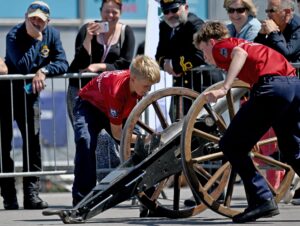
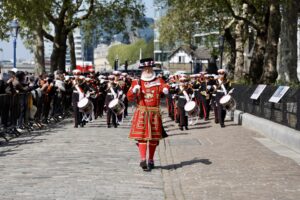
The Volunteer Cadet Corps (VCC) celebrates 120 years on 14th Feb 2021. The VCC has units operating in Portsmouth, Gosport, Fareham, Plymouth, Lympstone (nr. Exmouth), Arbroath (Scotland) and have expanded this with a new unit set to open in Chivenor, North Devon.
The Aim of the VCC is to provide opportunities for young people to develop into responsible, dependable and useful members of society, employing the traditions and practises of the Naval Service as the basis for their activities.
The VCC was ‘stood up’ with one unit at what was then the Royal Marines Artillery (RMA) barracks at Eastney in Portsmouth with the first night on 14th February 1901, a date that has played havoc with anniversary celebrations ever since thanks to St Valentine!.
First known as the Royal Marines Artillery Cadet Corps, not only was it the first cadet unit in what was to become the VCC but it was the first cadet unit formally established and recognised by the Admiralty.
The VCC ‘legend’ has it that, the children of Royal Marines Artillerymen (all of whom lived ‘on board’ in the barracks) had very little to gainfully occupy their spare time and were often to be found outside playing around throughout the barracks. This included impromptu football games and sometimes the ball would be ‘accidentally’ kicked through a barrack room window. But on one occasion the ball was kicked through the Commanding Officer’s office window and so he summoned the Adjutant to find a way to keep this from happening. The VCC was subsequently born although only with the sons of serving Royal Marines Artillerymen; thankfully today we are much more diverse and accepting.
It was in 1904 that the first Royal Naval Cadet unit was established at the then HMS Victory Royal Naval Barracks (now HMS Nelson). It was modelled on the RMA Cadets at Eastney and it was in this year that further RMA and Royal Marines Light Infantry (RMLI) cadets were stood up in Chatham and Plymouth. Such was the success of these cadets’ units, all sponsored and recognised by the Admiralty, more units were set up at HMS Excellent, Forton Barracks in Gosport and Royal Marines Deal in Kent, and later on at all the Royal Navy ‘stone frigates’ located in the Portsmouth area.
We don’t know when the title Volunteer Cadet Corps was first used, but the earliest record we have is from a Navy List in 1913. The word ‘volunteer’ was used a lot at the time especially in territorial units and indicates that the instructors were drawn from volunteers in the respective barracks, although we wonder if they were perhaps ‘volunteered’ rather than being so willing! Nevertheless, and indeed to this day, a service helper volunteer was often excused barracks duties.
Because of the way the VCC was set up back in the early 1900s the Cadet Corps has always been based within Royal Navy and Royal Marines establishments, unlike the majority of our peer community cadet forces. This remains our practice to this day, and whilst we are now open to young people from civilian families, we still have a sizeable proportion of service children joining as cadets. Our unit COs are now cadet force adult volunteers (CFAVs) but there is always someone from our parent establishments appointed as our liaison officer, retaining the important link between the cadets and the base that supports them.
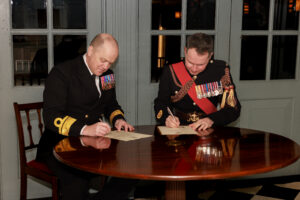
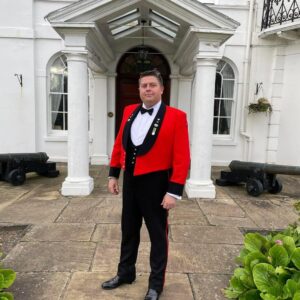
The 120th year of the VCC coincides with the appointment of a new Commanding Officer, Lt Col (VCC) Chris Spratt, Commander VCC
Lt Col (VCC) Chris Spratt said:
“Recently I was honoured and delighted to be appointed as Commander VCC, the senior adult volunteer in the VCC. My time in the VCC also started at Royal Marines Eastney, some 38 years ago, and my passion for what we do to help young people develop and prepare for life has never diminished.
At a critical time in our history, as we deal with the effects of Covid whilst also looking to expand our organisation, I’m looking forward to the challenge of steering the VCC into its 120th year. We may not be able to celebrate properly just yet, but we will still mark our 120th anniversary and give thanks to the cadets and volunteers who have contributed to our amazing history. Their legacy is the foundation of our future as we seek to ‘Meet The Challenge’ of modern times.”